JWH painting updates

Remembering others, and moving forward by JW Harrington

With their holidays, May and June bring us in the U.S. to remember the mothers, grandmothers, soldiers, sailors, flyers, fathers, and grandfathers who have protected us, the enslaved people who helped build this country, and the sexual minorities who’ve suffered for who they are. These holidays draw strong emotions from many of us. 

I’ve had the temerity to paint remembrances of my own father and mother (The Impossibility of Knowing (13) and (14))

IoK (13) & (14).jpg

and of my childhood home (The Impossibility of Knowing (12)), https://www.jwharrington.com/the-impossibility-of-knowing.

IoK (12), final.jpg

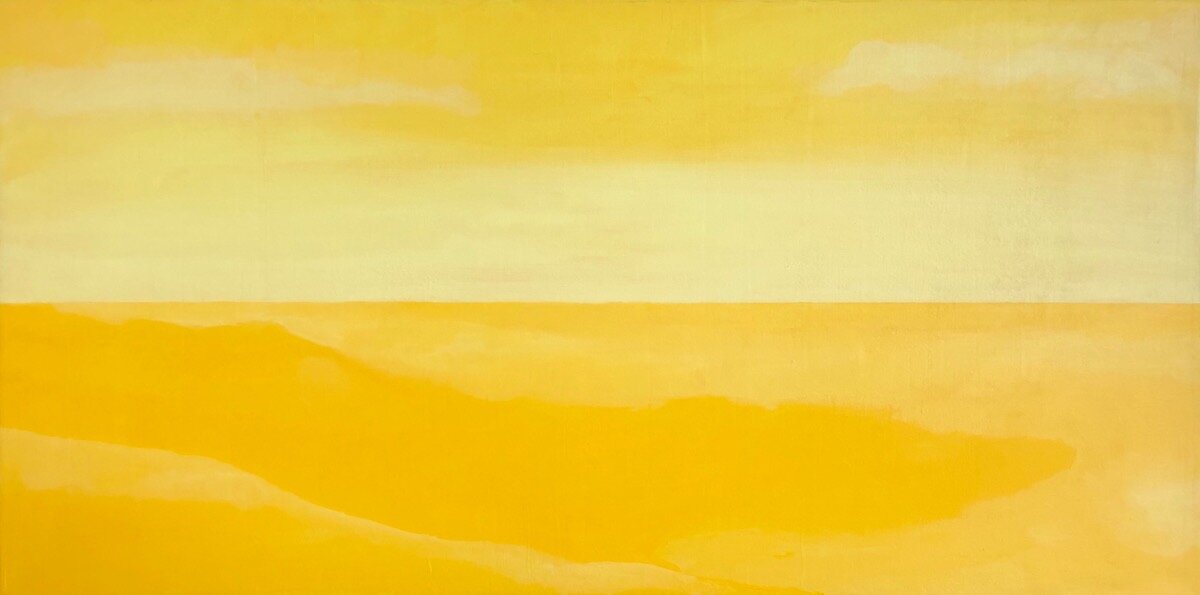
In the Northern Hemisphere, May and June also call forth the beginning of summer daylight and warmth.  Thus, this season leads us to recall our origins, to remember those who’ve passed on, and to look ahead toward the light.

I’ve had the joy of painting an impression of a favorite summer scene (Summer Seascape: Iceberg Point). https://www.jwharrington.com/figurativ-paintings.

Summer Seascape (Iceberg Point).jpg

Now, at least as much as ever, we need the light!

Now at Gallery 110, Seattle! by JW Harrington

Gallery 110-1.jpg

I’m really pleased to announce that I’m now a member of Gallery 110, online at Gallery 110.com and physically at 110 Third Avenue S. in Seattle’s Pioneer Square. I’m even more pleased that the Gallery’s June show is a group show that includes four of my paintings. If you’re in or near Seattle, try to get by noon-6PM on Thursdays, Fridays, or Saturdays: 206-624-9336.

gallery110exterior.jpg
Gallery 110-2.jpg

Finding hope by JW Harrington

Two of my recent works explicitly explore the need to find light and hope amid oppressive circumstances, and I’ve titled them so. 


Dusk of Agony (https://www.jwharrington.com/figurativ-paintings/dusk-of-agony) depicts a dramatic sunset during the smoke that pervaded the northwest US during the peak of wildfire season – fires in California, Oregon, and Washington produced smoke that covered much of the eastern Pacific Ocean and carried back north and west.  It’s dusk, dark, threatening, and yet has openings of sunlight and a deep, deep blue waterscape.  I hope it really does depict the dusk of our shared agonies.


Season of Darkness, Season of Light (https://www.jwharrington.com/figurativ-paintings) loosely depicts late afternoon (believe it or not, once you look at it) during the same period, looking over the Tacoma Narrows toward the Narrows Bridge.  It’s nearly monochromatic (which was surprisingly gratifying to render), but has impressionistic points of light, reflecting off the water from the barely visible sun.  Again, I’ve titled it to provide a sense of hope. 

Non-objective art by JW Harrington

As you know, I love visual abstraction.  “Abstract” art may reflect something actually seen – but abstracted to heighten the impact.  Impressionist paintings are great examples of this, as are Expressionist paintings.  Further back in time, Mannerist painting elongated limbs and exaggerated human gestures, to heighten the drama of scenes that the viewer can interpret from their own experiences. 


One extreme of abstraction is often called “non-objective,” because it contains no reference to actual objects.  This is discomforting for some viewers, who want to relate a painting to something familiar or even to some thing imagined.  However, it gives the mind totally free rein to interpret meanings or to revel in the visual stimulation without meanings.  Non-objective pieces are “ever green” – always fresh for the viewer, who can see something different at each viewing.


Automaton (https://www.jwharrington.com/other-abstractions/automaton) is such a piece, presenting bold colors against a white background.  (Against white, even black appears as a bold color.)  I painted this as flat as possible, using acrylic gouache, to provide no texture – just color and shape.


Cusp (https://www.jwharrington.com/other-abstractions) is a new favorite of mine, because it uses a mix of pigments (Cobalt Blue and Ultramarine Blue) to yield a blue so “deep” I feel I can swim in it.  To heighten the contrast, I’ve surrounded the blue (graded from pale to deep) with white.  And what role does that bright red circle (or sphere?) play in the composition?


Color Abstraction 30 (https://www.jwharrington.com/color-abstractions) continues the series I’ve been working on for years:  each painting is 24” x 24”, with strictly straight lines or shapes on a solid background.  Here we have interlaced rectangles in white, Cobalt Blue, and a rich, ruddy brown.  I’ve created several interpretations of this composition, and have placed it in the entry of our house, where I can create new interpretations every time I come home.  (I only wish that others could visit and see it – it could be a great conversation piece.)